
JAPAN — BETWEEN RITUAL AND MODERNITY

Japan is a country of extraordinary contrasts.

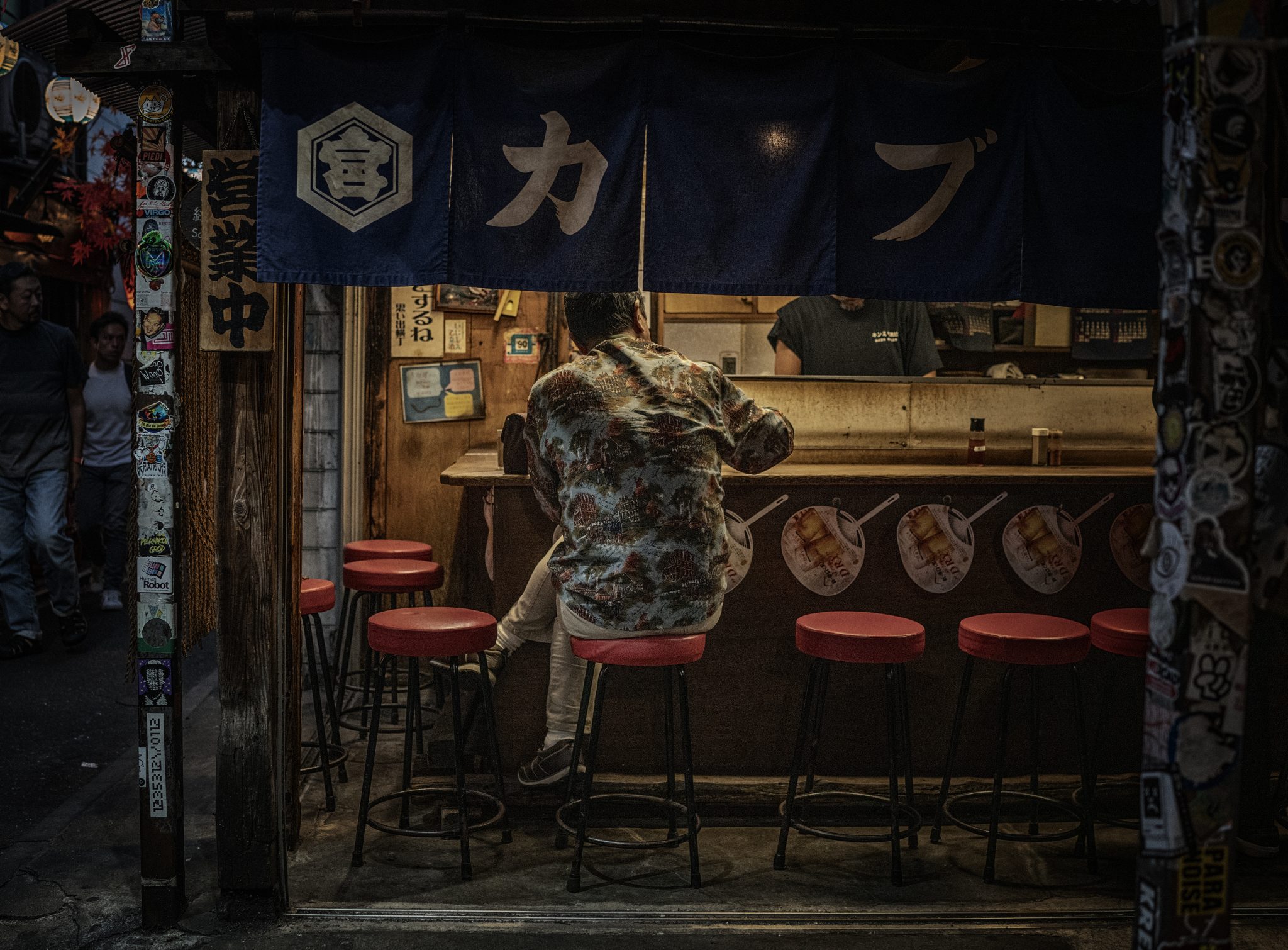
Ancient Buddhist temples stand beneath cedar forests. Centuries-old festivals fill historic streets with lanterns, ritual and colour. Remote mountain villages preserve traditions that have survived for generations, while Tokyo and Osaka move to the rhythm of one of the most modern societies in the world.

This photographic workshop is designed to take you beyond the obvious.

Over the course of the journey, we will travel from Tokyo into the Japanese Alps, through sacred mountain communities, dramatic Pacific coastlines and some of Japan’s most remote rural regions.

The emphasis is not simply on seeing Japan — but on understanding how to photograph it.

From the spectacular Takayama Autumn Festival and the historic O-Eshiki Festival at Minobu to the Buddhist world of Mt. Koya, the isolated Iya Valley of Shikoku, traditional crafts and Japan’s remarkable landscapes, every location has been selected for its photographic potential.

This is Japan seen slowly, thoughtfully and through the eyes of photographers.


    Highlights

    • Photograph the spectacular Takayama Autumn Festival, one of Japan’s most celebrated traditional festivals.
    • Experience the O-Eshiki Festival at Kuon-ji Temple, with lanterns, Buddhist traditions and centuries-old temple surroundings.
    • Photograph the rugged Pacific landscape of the Izu Peninsula.
    • Explore Mt. Omuro and its dramatic volcanic landscape.
    • Visit Enoura Observatory, created by internationally renowned artist Hiroshi Sugimoto.
    • Stay in a traditional Buddhist shukubo on sacred Mt. Koya.
    • Photograph the ancient cedar forest and monuments of Okunoin Cemetery.
    • Travel deep into Shikoku’s remote Iya Valley, one of Japan’s most isolated mountain regions.
    • Photograph traditional villages, vine bridges and rural life far from modern Japan.
    • Meet local craftspeople and photograph traditional Japanese indigo dyeing in Tokushima.
    • Experience both Tokyo and Osaka, providing a striking contrast to rural and spiritual Japan.

Expert CHRISTIAN NØRGAARD & JAMES WHITLOW DELANO

Led by Two Exceptional Photographers

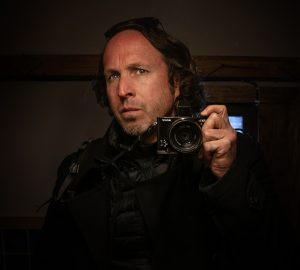
The workshop is led by Christian Nørgaard, founder of Better Moments, together with James Whitlow Delano, one of the most experienced international documentary photographers working in Japan today.

Christian Nørgaard has spent years photographing throughout Asia and leading international photography workshops in some of the world’s most culturally and visually compelling destinations. As founder of Better Moments, he has created and led workshops alongside some of the most recognised photographers in contemporary photography.

James Whitlow Delano brings something particularly valuable to this journey: Japan is his home.

Based in Tokyo for more than three decades, James has photographed extensively throughout the country — from Shikoku and Kyoto to Hokkaido and beyond. His work has appeared in National Geographic, National Geographic Traveler, The New York Times Magazine, Time and The New Yorker, among others. He has worked as a Photography Expert for National Geographic Expeditions, including photographic expeditions through Japan.

His long relationship with Japan gives the workshop a perspective that cannot be gained from simply visiting.

Together, Christian and James bring two complementary approaches: portraiture, visual storytelling, documentary photography, landscape and the ability to recognise the decisive moments that make an image memorable.

EXPAND WITH PASSION

On Location

  • Documentary and travel photography
  • Environmental portraiture
  • Street photography
  • Festivals, ceremonies and movement
  • Working discreetly in culturally sensitive environments
  • Composition and visual storytelling
  • Natural and available light
  • Landscape photography
  • Changing weather and difficult lighting conditions
  • Creating a coherent photographic story rather than isolated images

In Classroom

  • Individual image reviews
  • Constructive critique
  • Editing and image selection
  • Building a photographic sequence
  • Developing your personal visual language
  • Portfolio discussions
  • Workflow and post-production
  • Lectures by the experts
  • Preparing photographically for the following day

ITINERARY


DAY 1: Welcome to Japan: The Journey Begins

After your arrival and hotel check-in, you can independently hit the streets of the world’s largest city, Tokyo. Not only is it one of the most fascinating cities in the world, but it’s also one of the safest. Tokyo has it all: tradition at the Meiji Shrine and Sensoji Temple, or youth ground zero in Harajuku or at Shibuya’s famous Scramble Crossing.

In the evening, Christian Nørgaard and James Whitlow Delano will host a welcome dinner. After dinner, they’ll introduce the workshop and give presentations of their work.

DAY 2: Tokyo to the Autumn Takayama Festival

Bright and early, we’ll depart for Takayama in the heart of the Japanese Alps.

Arriving in Takayama in the afternoon, the Autumn Takayama Festival (also called the Hachiman Matsuri), rated as one of the three most beautiful festivals in Japan, will be in full swing in the old town. That evening the (“yomatsuri”/night festival) will feature a procession of large “yatai” floats, multi-tiered wheeled lacquered shrines, covered with washi paper lanterns pulled by men dressed in Edo Period (1603 – 1867) garb.

DAY 3: Autumn Takayama Festival

Rising early, we’ll be dedicating the entire day to photographing the Autumn Takayama Festival. In addition to the floats on massive carts, there will be “mikoshi” portable, palanquin-like shrines borne on the backs of chanting merrymakers wearing colorful traditional clothing and all manner of head gear.

DAY 4: Takayama to Minobu and the O-Eshiki Festival

Leaving Takayama early, the destination today will be the Kuon-ji Buddhist Temple in Minobu at the foot of the Southern Japan Alps. The 740-year-old O-Eshiki Festival will offer an opportunity to photograph cascading paper lanterns, brought out to commemorate the passing of the founder of the Nichiren sect in 1282, beneath weeping, centuries-old cherry trees and towering Japanese cedars.

Kakurinbo Buddhist Temple, which has welcomed guests for 550 years, will be our home for these two nights in Minobu.

DAY 5: Minobu and the O-Eshiki Festival

Today, we will spend the whole day at Kuon-ji Buddhist Temple, established in 1274, as the festival continues but this will also give us an opportunity to more fully explore the Buddhist temple complex, trails through the lush forest, or stroll through the village itself.

DAY 6: Futo “Floating Island” Coast

Now, we descend to the Futo “Floating Island” Coast on the Izu Peninsula’s rugged west coast. We will explore forested cliffs, grottos, and stone pillars, confronting crystal-clear Pacific seawaters. On clear days, Mt. Fuji can be seen across the bay. This will be a loosely structured day where we go with the flow, and let the light determine how long we stay at each location.

In the evening, we stay in Shimoda, where US Commodore Perry sailed his menacing black ships in 1854, coercing Japan to open up several treaty ports to foreign ships by representatives of the shogun, Ieyasu Tokugawa. Shimoda was the first such port on Japan’s main island of Honshu.

DAY 7: Mt. Omuro, grass-covered volcanic cone & Enoura Observatory

First up, today, Mt. Omuro, a perfect volcanic cone covered in lush grass. This gives us an opportunity to walk along the rim of the extinct volcano taking in dramatic 360-degree views of the Pacific, mountains and farmland.
In the afternoon, we visit the Enoura Gallery, a jaw-dropping art museum, designed by world-renown artist, Hiroshi Sugimoto, and featuring his work, housed in a stunning structure, employing traditional Japanese aesthetics, all set in a sloping citrus grove with ocean views.

Time permitting, we close the day at tip of the Manazuru Peninsula, descending what is actually an ancient lava flow to photograph, “Mitsuishi”, the Three Stones, topped by a Shinto torii gate and connected by a massive, hand-woven, straw rope, strung between the volcanic stones.

DAY 8: To Mt. Koya

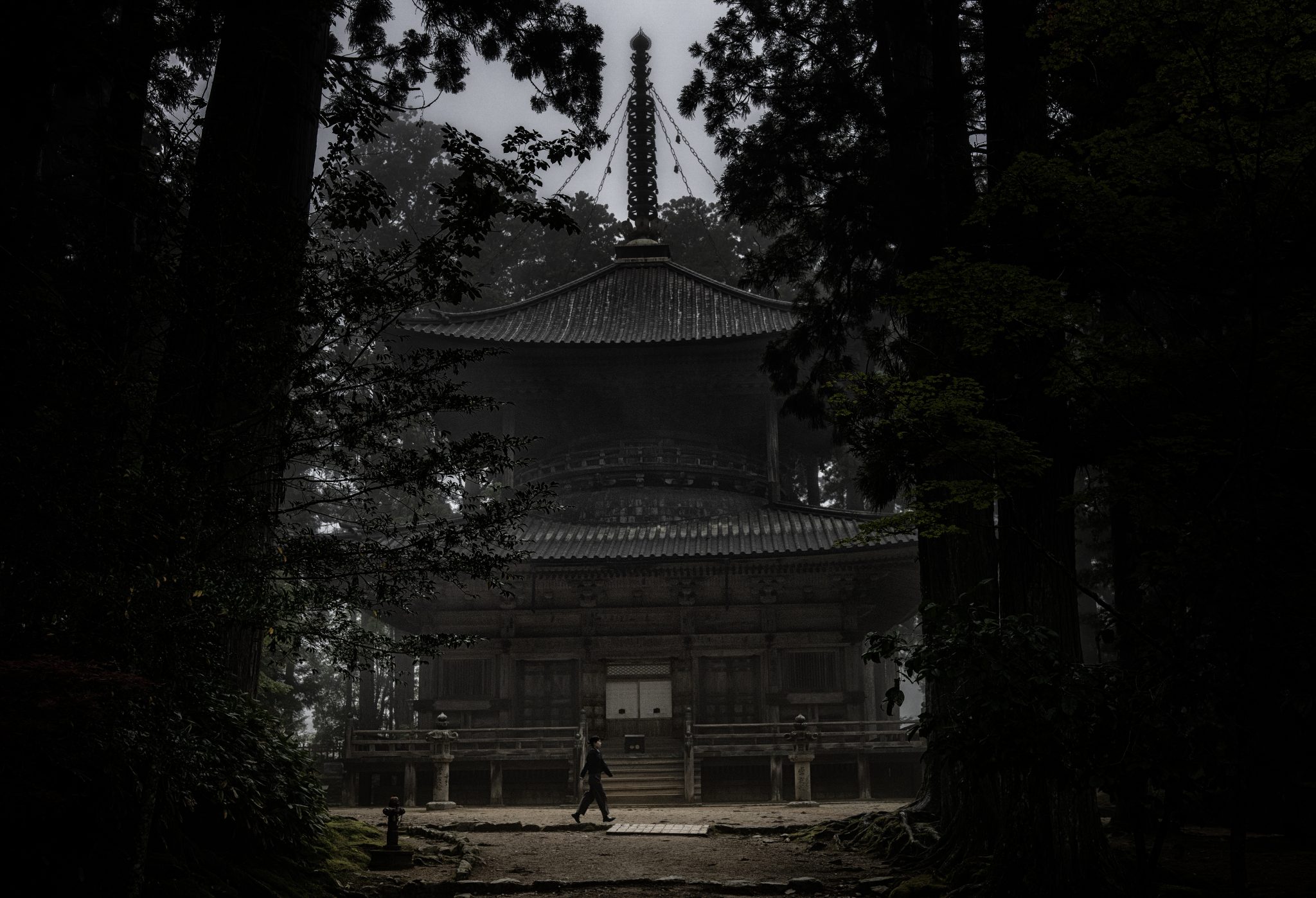
We rise early to take the Shinkansen, Japan’s famed bullet train, to Osaka, then connect with ground transportation that will climb up the winding roads to Mt. Koya, one of Japan’s most sacred mountaintop sites. Mt. Koya was founded by Japan’s truly Renaissance man, monk, Kūkai in 816 CE. After returning from China, Kūkai, gained the blessing of the Japanese emperor, who deeded this land to him so he could establish the Shingon sect of Buddhism.

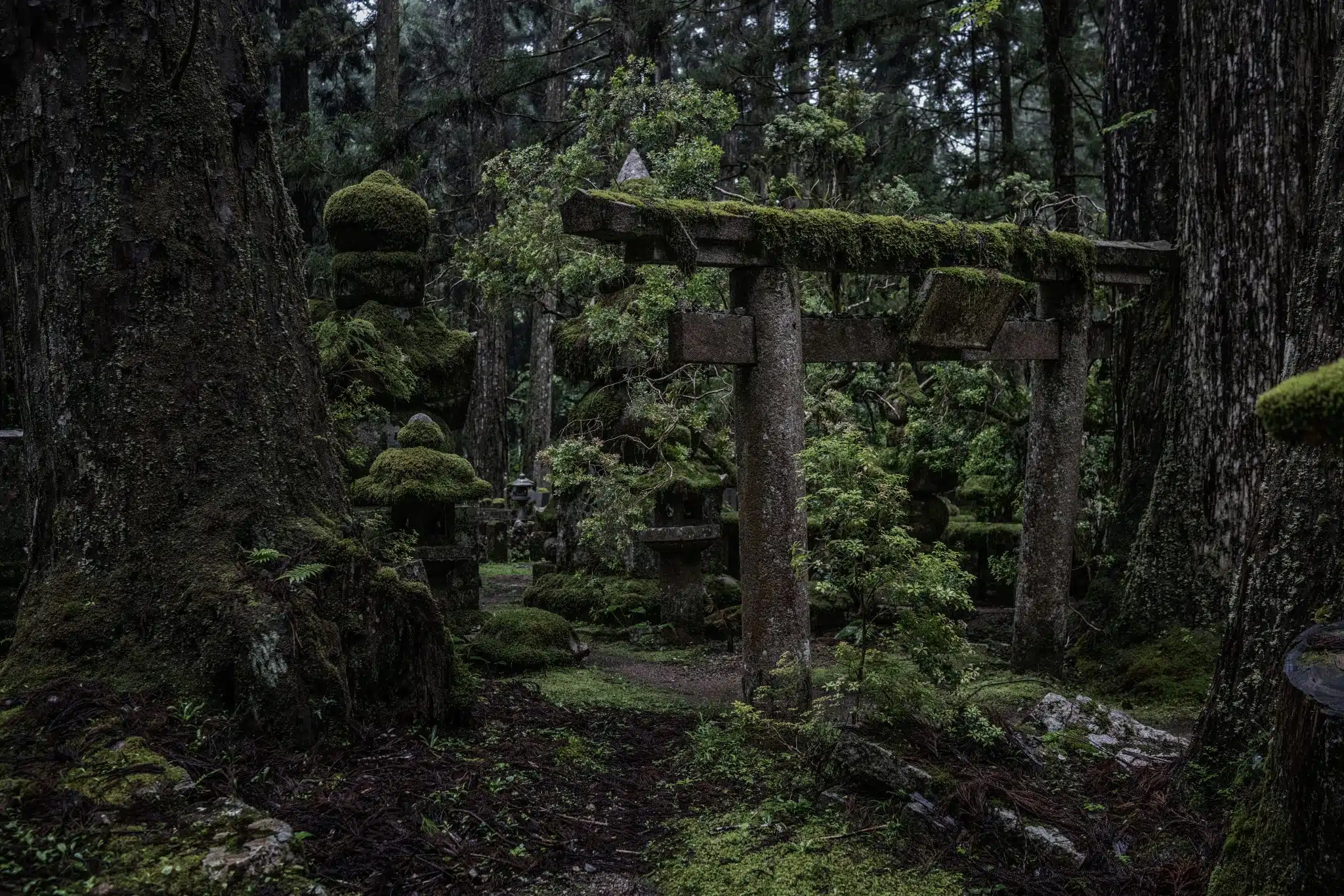
Okunoin Cemetery at Mt. Koya is a feast for the eye, and lens. A centuries-old Japanese cryptomeria forest towers like redwoods, above moss-covered stone monuments creating a breathtaking open-air arboreal cathedral. At the far end of the sacred forest, Kūkai is entombed, though the faithful say he is engaged in “eternal meditation” awaiting the arrival of Miroku (Maitreya).

Tonight, we stay at a tradition “shukubo”, Buddhist temple stay. Mt. Koya sits at 1,000 m. So, it will be time to bundle up for a cool, fresh night – “good sleeping weather”.

DAY 9:  Mt. Koya

The first half of the day will be spent in Mt. Koya, where we can visit Kongobuji, a massive all-wood Buddhist temple complex and a UNESCO World Heritage site, built in 1593, featuring Japan’s largest rock garden and dozens of satellite temples and pagodas to explore, all set in lush forest.

In the afternoon, we descend to the coast and the castle town of Wakayama, from where we will cross from the main island of Honshu to Shikoku, the following morning.

DAY 10: Wakayama to Shikoku´s Iya Valley

This morning the Nankai Ferry will take us from Wakayama to Shikoku.  If you felt that Mt. Koya was remote, today we will climb to arguably Japan’s most isolated mountain region.

In the 12th century, a massive civil war, the Genpei War, resulted in the expulsion of the ruling Heike clan. The surviving Heike samurai are believed to have escaped into the rugged mountain sanctuary of the Iya Valley.  The gorge, we follow up to the valley, speaks to the rugged fastness of the region.  Certain words and customs in the local community, hint at the Heike samurai connection to this day.

In the evening, we can take a well-earned hot spring bath at our hotel the Hikyo-No-Yu Onsen (Hot Spring Resort), our home for the next two nights.

DAY 11: Iya Valley, Shikoku

As a form of defense, the samurai exiles spanned rivers with vine bridges called, “kazura-bashi”.  Legend says that the bridges could be cut, in case their enemies tried to pursue them in their mountain refuges.  We will visit to of the finest examples of these vine bridges but many hanging cable pedestrian bridges are still in active use throughout the valley.

Lunch will be a traditional “sansai’ (wild mountain vegetable) lunch prepared by Tsuzuki-san, an octogenarian resident who climbs through the mountain forests daily to collect mountain vegetables for our meal.

Villages in the Iya Valley were built high up the mountain slopes, above the shadows and rugged terrain below.  In the afternoon, we’ll enjoy savory roasted tea, a local speciality, from the high ground of Ochiai Village, looking out over the Edo Period (1603 – 1867) farmhouses, many with thatched roofs.

DAY 12: To Osaka / Indigo Dying Workshop En Route

On the final day, to break up the journey to Osaka, we’ll stop at Furusho “Aizome” indigo dying workshop in Tokushima, often called, the heartland of “aizome”, where Japanese indigo (Persicaria tinctoria) is cultivated.  There will be the opportunity to document craftspeople hand-dying fabric the iconic deep indigo blue.

After arriving in Osaka, there will be free time to explore the city, including Osaka’s castle tower. On the final evening, Christian and James will host the farewell dinner.

DAY 13: Home, sweet home

Departure from the Osaka airport with a collection of images that reflect the cultural richness, landscapes, and living traditions of Japan – a journey that will remain with you for a lifetime.

More Than a Photography Tour

This is a working photography workshop.

Our days are built around the light, the people, the events and the opportunities we encounter.
At the major festivals, we will work among processions, lanterns, performers and local communities, learning how to create strong photographs in fast-moving situations. In quieter places — Buddhist temples, mountain villages, forests and coastal landscapes — the pace changes. Here, the emphasis shifts towards composition, observation, portraiture, atmosphere and visual storytelling.

Throughout the journey, Christian and James will work closely with the group, offering individual guidance and helping each participant develop a stronger and more personal photographic language.When appropriate, evenings will include image reviews, discussions and lectures, allowing us to examine the day’s work and prepare photographically for what comes next.

Get Inspiration

Japan Catalogue is coming soon

TRAVEL FACTS

Thanks for choosing Better Moments for your workshop.

Price

    • € 11,900 in shared double room.
    • € 12,650 in single room.
    • Groups sign-up a group of 4+ participants and receive a group discount.
    • All prices are per person.
    • INVITE A FRIEND
      Discover the delight of photography with our INVITE A FRIEND initiative! Bring along a friend or a loved one to our workshops and enjoy exclusive savings on the total rate, subject to availability!

 

Better Moments is a member of the Travel Guarantee Fund, your guarantee that traveling with Better Moments is a safe experiences.

Overview
QUICK GUIDE

GETTING THERE

Fly into Tokyo, Japan.

Most international travelers arrive via major hubs such as Doha, Dubai, Istanbul, Helsinki, Frankfurt, or other major Asian cities, with direct connections to Tokyo.
Note: The departure for the return journey will be from Osaka International Airport.

VISA

Visa requirements depend on your nationality. Many travelers can enter Japan visa-free for short stays, while others may need to obtain a visa in advance. We recommend checking the official Japanese embassy or government website in your home country for the latest entry requirements.

WEATHER

October is an excellent time to travel through Japan, with generally comfortable temperatures and the beginning of autumn colors in many regions.

Expect:

Temperatures ranging from approximately 10–25°C depending on the region
Cooler conditions in the mountains, especially at Mt. Koya
Milder temperatures along the coast and in the cities
Potential autumn foliage and atmospheric light

Perfect conditions for photography, walking, and exploring.

LANGUAGE

The official language is Japanese. English is spoken to varying degrees in hotels, major transport hubs, and tourist areas, but less commonly in rural regions. Basic communication is generally manageable, and your workshop leaders and local guides will assist throughout the trip.

CURRENCY

The local currency is the Japanese Yen (JPY).

ATMs are widely available, particularly at convenience stores and major transport hubs
Credit cards are widely accepted in cities, hotels, and larger businesses
Cash is still recommended for smaller purchases, rural areas, temples, and local establishments

QUICK GUIDE

Top things to experience in Japan:

  • Tokyo — A fascinating contrast of tradition and modern city life, from Meiji Shrine and Sensoji Temple to Harajuku and Shibuya Crossing
  • Takayama Autumn Festival — One of Japan’s most celebrated festivals, featuring elaborate floats, traditional clothing, lanterns, and lively processions
  • O-Eshiki Festival in Minobu — A spectacular Buddhist festival at Kuon-ji Temple, with cascading lanterns, traditional ceremonies, and centuries-old surroundings
  • Futo “Floating Island” Coast — Rugged cliffs, grottos, volcanic rock formations, and crystal-clear Pacific waters along the Izu Peninsula
  • Enoura Observatory — Hiroshi Sugimoto’s extraordinary architectural and artistic space overlooking the ocean and surrounded by a citrus grove
  • Mt. Koya — One of Japan’s most sacred Buddhist destinations, with ancient temples, forests, and the atmospheric Okunoin Cemetery
  • Iya Valley — A remote mountain region of dramatic gorges, traditional villages, vine bridges, and fascinating local traditions
  • Aizome Indigo Workshop — A chance to photograph traditional Japanese craftsmanship and the meticulous process of hand-dyeing fabric in deep indigo

IMPORTANT NOTE

For the temple stay at Mt. Koya, please pack a separate soft duffle bag for your overnight stay. The shukubo does not allow wheeled suitcases.


TERMS AND CONDITIONS
Frequently Asked Questions
Bepar to four story

Be a part of our story

Join our Better Moments community and get access to exclusive behind the scenes content, tips & tricks from our experts, and travel stories that we only share with our newsletter subscribers. You will be the first to know about new workshops, special offers and giveaways.

Loder